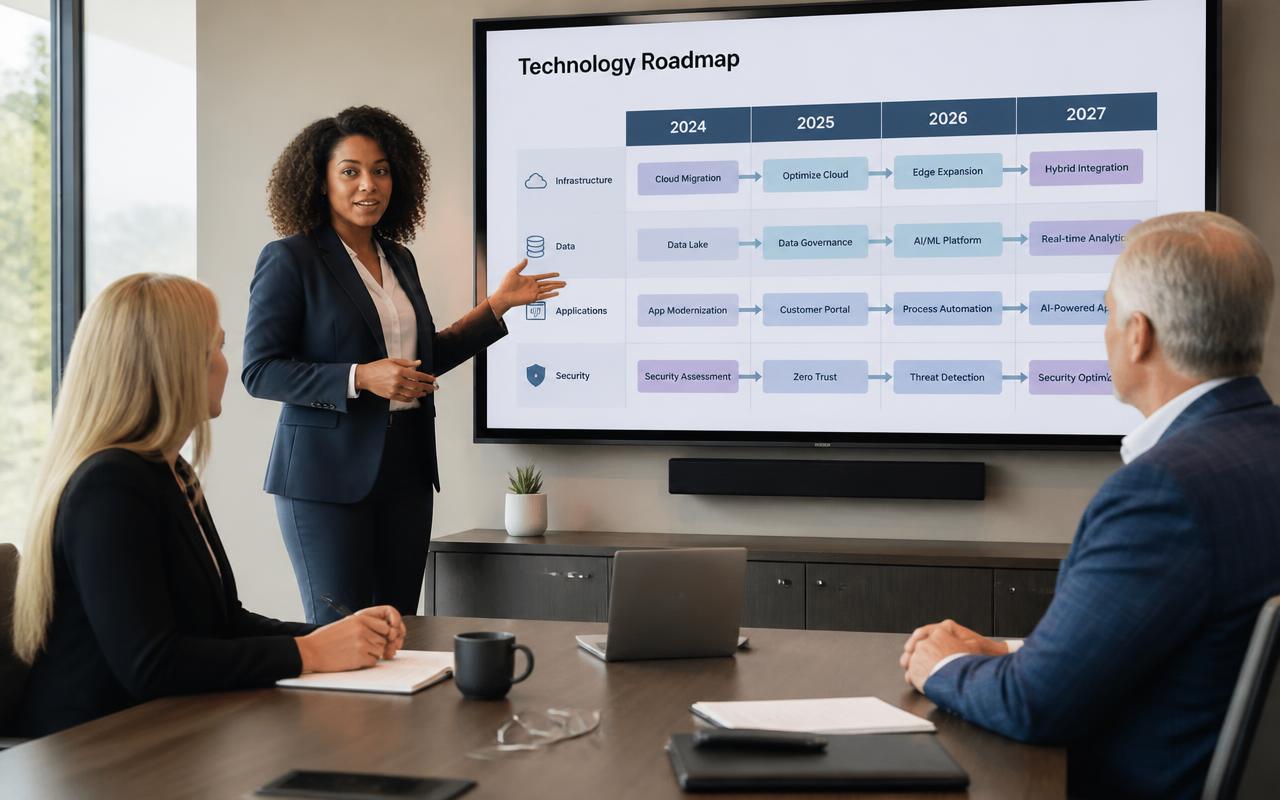
Cloud migration is often presented as a single decision. In practice it is several: where applications run, where data lives, how identity is managed and who supports it.
The strongest cases for moving are ageing hardware approaching replacement, a workforce that needs access from multiple locations, and an operation that cannot tolerate the recovery time of an on-premise failure.
The weaker cases are cost alone. Moving a workload without redesigning it usually moves the cost rather than reducing it. Savings tend to come from retiring hardware, consolidating tools and reducing manual administration.
Security changes shape rather than disappearing. Physical risk decreases; identity and access risk increases. Multi-factor authentication, access reviews and backup of cloud data become the controls that matter.
Connectivity becomes critical. Once the applications are remote, the link to them is the business. That usually means designing resilience into the network at the same time.
A sensible approach is to evaluate workload by workload — what it costs today, what it would cost hosted, what breaks if it is unavailable, and what has to change around it.